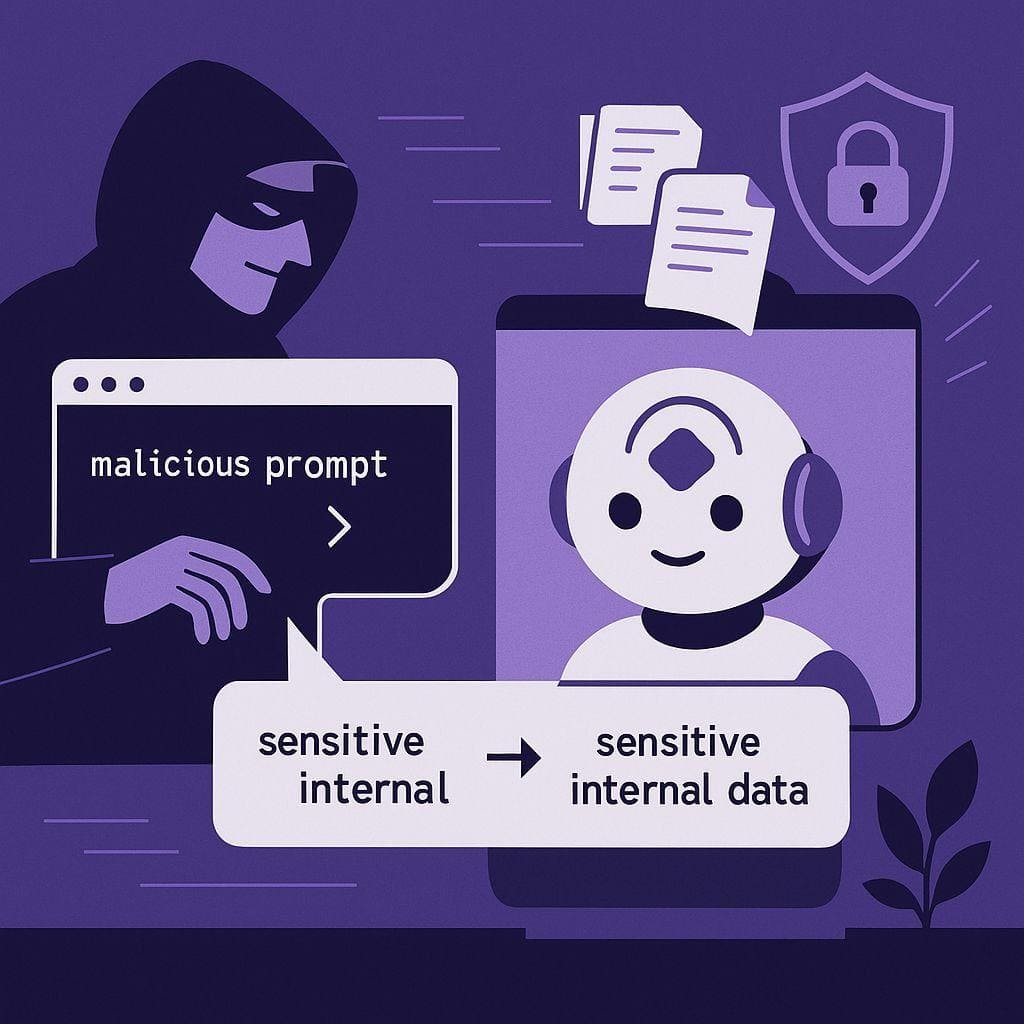

Artificial intelligence is becoming an important part of everyday digital life. Businesses use AI to detect fraud, recommend products, identify security threats, analyze customer behavior, and automate important decisions. However, the accuracy of these systems depends heavily on the quality of the data used to train them.
What happens when that data is deliberately manipulated?
This is where AI data poisoning becomes a serious cybersecurity concern. Attackers can introduce misleading, incorrect, or harmful information into a dataset to influence how an AI model learns. As a result, a system that appears intelligent and reliable may begin making incorrect predictions, overlooking threats, or producing unexpected results.
Unlike a traditional cyberattack that directly targets a computer or network, data poisoning attacks target the information an AI system learns from. Understanding this threat is becoming essential for organizations that depend on machine learning and other AI technologies.
What Is AI Data Poisoning?
AI data poisoning is a type of attack in which someone deliberately alters, adds, or corrupts data used to train an artificial intelligence or machine learning model.
AI models learn patterns from examples. During training, they analyze large amounts of information to recognize objects, identify suspicious activities, understand language, or predict future outcomes. If attackers influence those examples, the model may learn incorrect patterns.
For example, imagine a company training an AI system to identify fraudulent transactions. If an attacker manages to introduce misleading transaction records into its training dataset, the model may learn to treat certain suspicious activities as legitimate.
The system might still function normally and produce confident predictions. However, its decisions could become less accurate because the information it learned from was compromised.
Data poisoning does not always cause an AI model to stop working. In some cases, the model continues operating as expected while making subtle mistakes that are difficult to detect.
How Does an AI Data Poisoning Attack Work?
Data poisoning can happen at different stages of the AI development process. The exact method depends on how the model is trained, where its data comes from, and which parts of the pipeline an attacker can influence.
1. Finding a Weak Point in the Data Supply Chain
Attackers first look for opportunities to influence the information used to train an AI model. This could include publicly collected datasets, user-submitted content, third-party data sources, or internal records that are not properly protected.
If an organization accepts information without checking its origin or integrity, harmful data may enter the training process.
2. Introducing Misleading Information
The attacker attempts to insert false, modified, or intentionally misleading examples into the dataset. These examples may look similar to legitimate records, making them difficult to identify through basic checks.
In some situations, the attacker may manipulate existing data instead of adding new records.
3. Influencing the Learning Process
During training, the AI model analyzes the contaminated dataset and adjusts its internal parameters based on the patterns it discovers.
If the poisoned examples influence those patterns, the model may develop unreliable behavior. The impact depends on the amount of manipulated data, its quality, the training method, and the model’s design.
4. Exploiting the Model’s Weaknesses
Once the affected model is deployed, its weaknesses may appear in real-world decisions. It could misclassify certain inputs, overlook particular threats, or respond incorrectly to specific situations.
These problems may remain unnoticed until the organization investigates unusual results or experiences a security incident.
Common Types of AI Data Poisoning Attacks
Data poisoning can take several forms. Understanding the differences helps security teams recognize where additional protection may be needed.
1. Training Data Manipulation
In this approach, attackers introduce inaccurate or misleading examples into a model’s training dataset. The goal is to influence the patterns the model learns.
For example, a spam detection system trained on manipulated email records might become less effective at identifying certain unwanted messages.
2. Label Flipping
Many machine learning models learn from examples that have been assigned labels. These labels tell the model what an example represents, such as fraudulent or legitimate, safe or unsafe, or spam or normal.
In a label-flipping attack, an attacker changes some of these labels to incorrect values. Over time, the model may learn the wrong relationship between an input and its expected result.
3. Backdoor Attacks
A backdoor attack attempts to make an AI model behave normally in most situations but produce an attacker-desired result when a particular trigger appears.
For instance, a compromised image recognition model might correctly identify most objects but misclassify an image containing a specific trigger pattern.
Backdoors are particularly concerning because ordinary accuracy tests may not reveal the hidden behavior.
4. Targeted Data Poisoning
Some attacks aim to influence a particular prediction or category rather than reduce the model’s overall performance.
An attacker might attempt to make a fraud detection system overlook a narrow class of suspicious activity. Most other transactions could still be classified correctly, making the manipulation harder to notice.
5. Poisoning Data Collected From External Sources
AI systems may learn from public websites, customer feedback, uploaded documents, external databases, or other third-party sources.
If these sources contain manipulated information, and that information enters a training pipeline without appropriate validation, the model may learn misleading patterns. Simply collecting data from a public source does not guarantee that the information is trustworthy.
Real-World Risks of AI Data Poisoning
The impact of a poisoning attack depends on the AI system’s purpose and the decisions it supports. In some cases, the consequences may be minor. In others, they could affect security, finances, or critical business operations.
Cybersecurity Systems May Miss Threats
Organizations increasingly use AI to detect malware, identify unusual network activity, and recognize phishing attempts. If training data is manipulated, a security model may become less reliable at distinguishing legitimate behavior from malicious activity.
This could weaken an organization’s ability to detect suspicious events early.
Financial Fraud Detection Can Become Less Reliable
Banks and payment providers use machine learning to identify unusual transactions. Poisoned training data could distort the patterns used to distinguish legitimate payments from fraud.
Incorrect predictions may lead to missed fraudulent activity, unnecessary transaction blocks, or additional investigation costs.
Healthcare AI May Produce Incorrect Predictions
AI systems used in healthcare research and clinical support depend on appropriate data quality and validation. Manipulated training information could affect their ability to recognize patterns or make reliable predictions.
Such systems require careful oversight, independent testing, and appropriate clinical safeguards. AI outputs should not be treated as automatically correct.
Business Automation Can Make Poor Decisions
Companies use AI to forecast demand, score leads, classify documents, and support operational decisions. If a model learns from corrupted data, its recommendations may become less useful or systematically inaccurate.
Because automated systems can process large amounts of information quickly, an undetected problem may affect many decisions before anyone identifies the cause.
Generative AI May Learn Misleading Patterns
Generative AI systems are also affected by the quality and integrity of their training data. Manipulated information can influence what a model generates, which associations it learns, or how reliably it handles particular topics.
The exact outcome depends on the model and the way the data was introduced. Not every inaccurate AI response is evidence of data poisoning; model limitations, outdated information, and other technical issues can also cause errors.
Warning Signs of a Possible Data Poisoning Attack
Data poisoning can be difficult to identify because an affected model may continue operating without obvious technical failures. However, certain changes deserve investigation.
- Unexpected drops in accuracy: The model begins making more mistakes on previously reliable tasks.
- Unusual classification patterns: Specific types of input are repeatedly categorized incorrectly.
- Differences between training and real-world results: Performance during testing does not match behavior after deployment.
- Suspicious changes in datasets: New records, unexpected label changes, or unexplained modifications appear in training data.
- Inconsistent model behavior: The system produces unusual results for particular inputs or situations.
- Unverified data sources: The training pipeline accepts information without sufficient checks on its origin or integrity.
These signs are not proof of an attack. They can also result from changes in real-world data, software updates, poor model design, or other technical problems. Security teams should investigate them before drawing conclusions.
How Organizations Can Prevent AI Data Poisoning
Preventing data poisoning requires more than improving the model itself. Organizations must protect the entire data lifecycle, from collection and storage to training, testing, and deployment.
1. Validate Training Data Before Use
Organizations should check incoming datasets for missing values, duplicate records, unusual distributions, inconsistent labels, and other quality problems.
Automated validation can identify suspicious changes, but it should be combined with appropriate human review for high-impact systems.
2. Verify Data Sources and Provenance
Data provenance refers to information about where data originated, how it was collected, and how it has changed over time.
Maintaining reliable records of data sources helps teams investigate suspicious entries and understand which datasets contributed to a model’s behavior.
Organizations should establish clear approval procedures for external datasets and restrict access to trusted sources.
3. Restrict Access to Training Pipelines
Only authorized people and systems should be able to modify training datasets, labels, model configurations, and training jobs.
Strong authentication, role-based permissions, audit logs, and secure storage can reduce the risk of unauthorized changes.
4. Test Models Against Unusual Inputs
AI systems should be evaluated using clean validation datasets and separate test datasets that were not used during training.
Security teams should also examine performance across different input categories, test for unexpected behavior, and investigate significant differences between expected and actual results.
For sensitive applications, independent security testing can help identify weaknesses that routine performance checks may miss.
5. Monitor AI Behavior After Deployment
Model security does not end when training is complete. Organizations should track performance, monitor unusual prediction patterns, and investigate unexplained changes.
If a model begins behaving unexpectedly, teams should have a documented process for restricting its use, investigating the cause, and restoring a verified model when necessary.
6. Secure Third-Party AI Components
Companies that rely on external datasets, pretrained models, or AI service providers should assess the security and reliability of those components.
This includes reviewing available documentation, understanding data sources where possible, checking update procedures, and testing models before using them in important business processes.
7. Maintain Reliable Backups and Recovery Plans
Organizations should preserve trusted copies of important datasets, model versions, and training configurations. Version control and reproducible training procedures can make it easier to investigate problems and recover from a compromised training process.
Recovery plans should also specify who can approve a replacement model and how it will be validated before deployment.
Why AI Data Poisoning Is Becoming an Important Security Concern
As AI becomes more deeply integrated into business software, cybersecurity operations, and automated decision-making, the information used to train these systems becomes an increasingly important security asset.
Organizations may invest heavily in protecting servers, applications, and user accounts while overlooking weaknesses in data collection and model development. This creates a gap between traditional cybersecurity controls and the additional protections needed for AI systems.
AI data poisoning also presents a challenge for organizations using continuously updated datasets. New information can help models adapt to changing conditions, but it can also introduce risks when its origin and quality are not properly assessed.
A strong AI security strategy therefore needs to combine traditional cybersecurity practices with data governance, model testing, access control, and ongoing monitoring.
Conclusion
AI data poisoning is a serious risk because it targets the information that intelligent systems use to learn. By manipulating training examples or labels, attackers may influence how a model recognizes patterns, evaluates information, and makes predictions.
The resulting problems are not always obvious. A poisoned model may continue functioning while producing unreliable results in specific situations, which makes prevention and early detection especially important.
Organizations can reduce this risk by validating training data, tracking its origin, protecting access to datasets, testing models thoroughly, and monitoring their behavior after deployment.
Ultimately, trustworthy AI begins with trustworthy data. As businesses become more dependent on intelligent systems, protecting the integrity of that data must become a core part of their cybersecurity strategy.
Frequently Asked Questions
1. What is AI data poisoning?
AI data poisoning is a cybersecurity attack in which attackers manipulate training data to influence how an artificial intelligence model learns, identifies patterns, and makes predictions.
2. How does AI data poisoning affect machine learning models?
AI data poisoning can reduce model accuracy, cause incorrect classifications, create hidden backdoors, and make AI systems unreliable in specific situations.
3. What are the common types of AI data poisoning attacks?
Common types include training data manipulation, label flipping, backdoor attacks, targeted poisoning, and attacks that exploit unverified external data sources.
4. How can businesses prevent AI data poisoning?
Businesses can reduce the risk by validating training datasets, verifying data sources, restricting access, testing AI models regularly, monitoring performance, and maintaining secure backups.